How to Choose the Best Haircut Length for Fine Hair
Choosing a haircut length for fine hair is not simply a matter of deciding whether you prefer short or long hair. The right length should support your natural density, keep the ends looking healthy and fit the amount of styling you are willing to do at home.
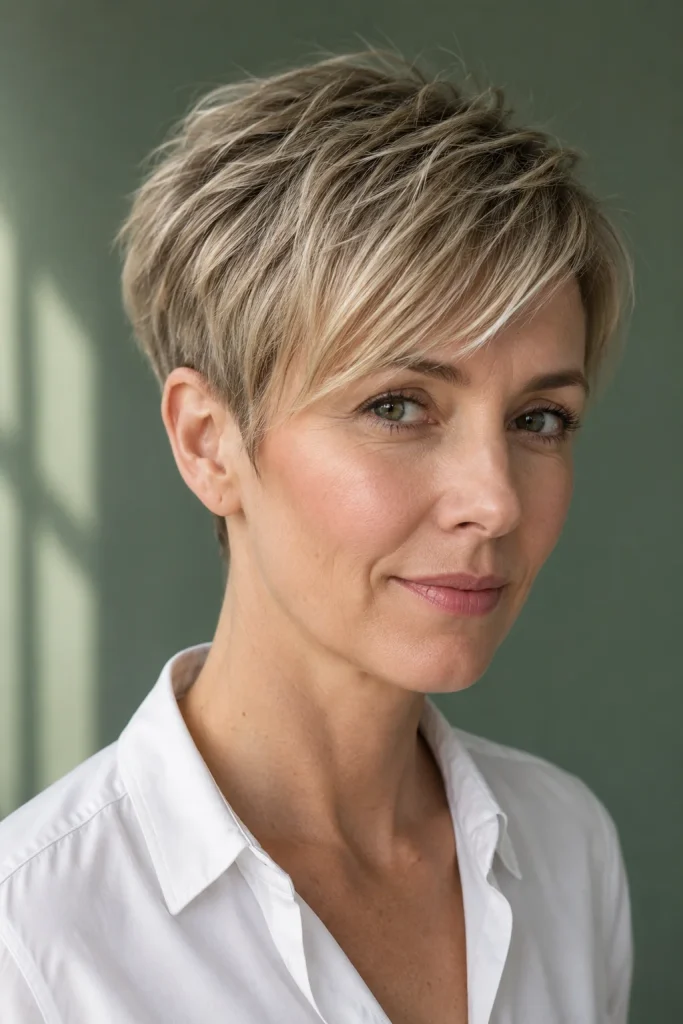
Fine hair can look full at almost any length, but some cuts make that fullness easier to maintain than others. A shorter cut removes weight and often gives the roots more lift. A medium-length cut can create a strong, healthy outline. Longer hair may work beautifully when the density is good and the ends remain substantial.
The challenge is finding the point where your hair still looks full without asking it to carry more length than it can comfortably support.
Start by Understanding Your Hair
Fine hair describes the width of each individual strand. It does not automatically mean you have very little hair.
You may have fine strands with high density, which means there are many hairs growing across the scalp. You may also have fine strands with lower density, where more scalp is visible and the ponytail feels smaller.
This distinction affects which lengths are likely to work best.
Fine hair with higher density can often support longer cuts because there are enough strands to create a solid outline. Fine hair with lower density may look fuller at a shorter or medium length because less weight is pulling on the roots and fewer wispy ends are left visible.
Texture also matters. Fine straight hair tends to show the outline of a haircut very clearly. Fine waves and curls can create natural body, but the pattern may stretch or lose shape when the hair becomes too long.
Before choosing a length, look at your strand thickness, overall density, natural texture and the condition of your ends.
Pay Attention to Where the Ends Become Thin
One of the easiest ways to identify a flattering length is to examine the lower section of your hair.
Look at your hair from the back in natural light. Notice where the ends begin to look transparent, separated or much thinner than the hair above them.
That point often shows how much length your current density can support.
For example, your hair may technically reach below your shoulders, but the last three inches may look sparse. Cutting back to the area where the hair still appears substantial can make the entire style look fuller.
This does not mean every end needs to form a perfectly solid line. Fine hair will naturally show some softness and separation. The concern is when the lower section appears weak enough that it distracts from the rest of the haircut.
A healthy-looking perimeter usually makes more difference than keeping every possible inch.
Consider How Much Weight Your Roots Can Handle
The longer the hair becomes, the more weight the roots need to carry.
Fine strands are lightweight individually, but a full head of longer hair can still pull the roots downward. This is one reason fine hair may look lifted after a trim even when only a small amount of length has been removed.
If your hair looks full near the ends but always falls flat at the crown, length may be contributing to the problem. Removing some weight can help, although the haircut shape and drying routine also matter.
Not everyone with flat roots needs a short haircut. Sometimes the issue can be improved with lighter product use, a different part or careful layering.
However, if the hair feels heavy and the roots collapse quickly regardless of styling, a shorter length may be easier to manage.
When a Pixie Cut Works Well for Fine Hair
A pixie can be a strong choice for fine hair because it removes the weight that often pulls the roots flat.
The shorter length allows natural growth patterns to create movement, especially around the crown. It can also make the hair appear denser because there are no long, sparse ends drawing attention downward.
The shape of the pixie matters. A little length through the top usually gives fine hair more styling flexibility than a very close crop. Soft texture can create movement, while a longer fringe can add shape around the face.
A pixie may work well when:
- Your roots become flat under longer hair
- Your ends are damaged or repeatedly breaking
- You prefer a defined haircut over long styling sessions
- You are comfortable visiting the salon regularly
- You do not mind using a small amount of product in the morning
The main consideration is maintenance. Short haircuts often need more frequent trims to keep their shape. A pixie may require less daily styling than long hair, but it usually needs more regular salon appointments.
Avoid asking for excessive thinning or too many tiny layers. Fine pixies often look better when the cut keeps enough substance through the fringe, crown and sides.
When a Bixie or Very Short Bob Works Well
A bixie sits between a pixie and a bob. It offers some of the lightness of short hair while keeping more length around the ears, neckline or face.
This can suit someone who wants lift and movement but is not ready for a very short cut.
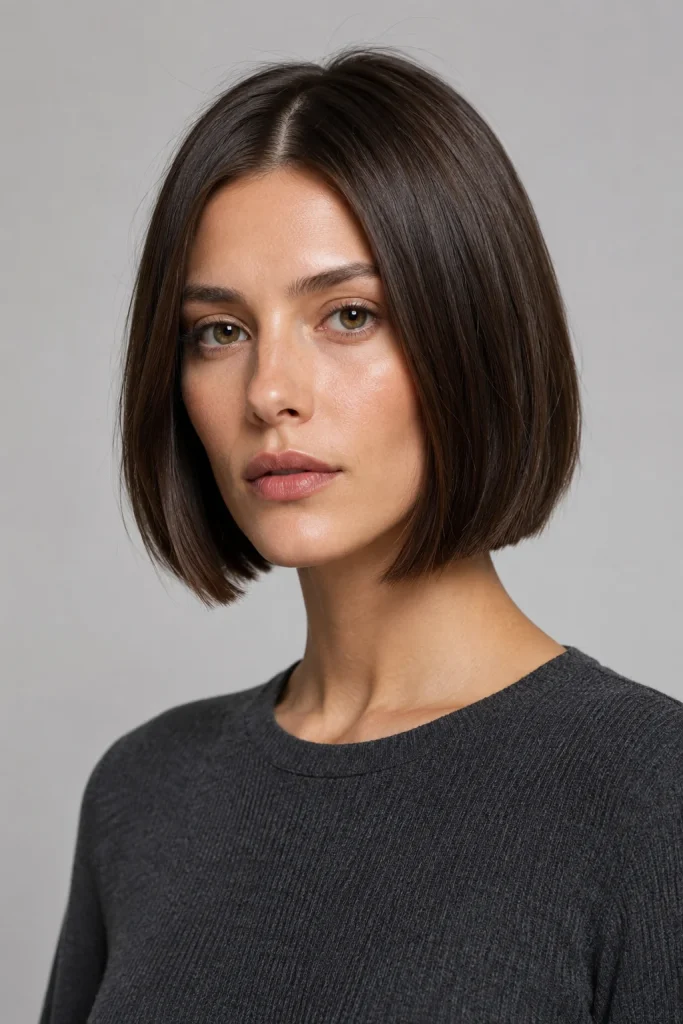
A short bob that sits around the jaw can also work beautifully for fine hair. The length is short enough to remove weight, while the perimeter creates a visible line that makes the ends appear fuller.
These cuts can be especially helpful when the hair is fine but not extremely sparse. They create shape without requiring the hair to support much length.
The neckline should be chosen carefully. A softly tapered neckline can keep the cut neat, while a stronger blunt line may create more density. Your stylist can adjust the shape based on how your hair grows at the back.
Why Chin-Length Bobs Often Suit Fine Hair
A chin-length bob is one of the most dependable lengths for fine hair.
It creates a strong outline near the jaw, where the hair is less likely to become thin and transparent. The length also allows the roots to lift more easily than they would with long hair.
A blunt bob tends to create the fullest appearance because most of the hair reaches a similar point. A softly graduated bob can add shape at the back, but too much stacking may leave the lower sections looking thin.
The exact position of the bob matters. A cut that ends at the widest part of the jaw may create a stronger, more graphic shape. A slightly longer bob can feel softer and may be easier to tuck behind the ears.
A chin-length bob may suit you when you want:
- A defined, polished outline
- Enough length to style straight, wavy or tucked behind the ears
- Less weight around the crown
- A cut that looks intentional without heavy styling
- Fuller-looking ends
Be realistic about your natural texture. A bob that sits perfectly smooth in a salon photograph may require daily blow-drying if your hair bends or flips naturally.
When a Lob Is the Best Middle Ground
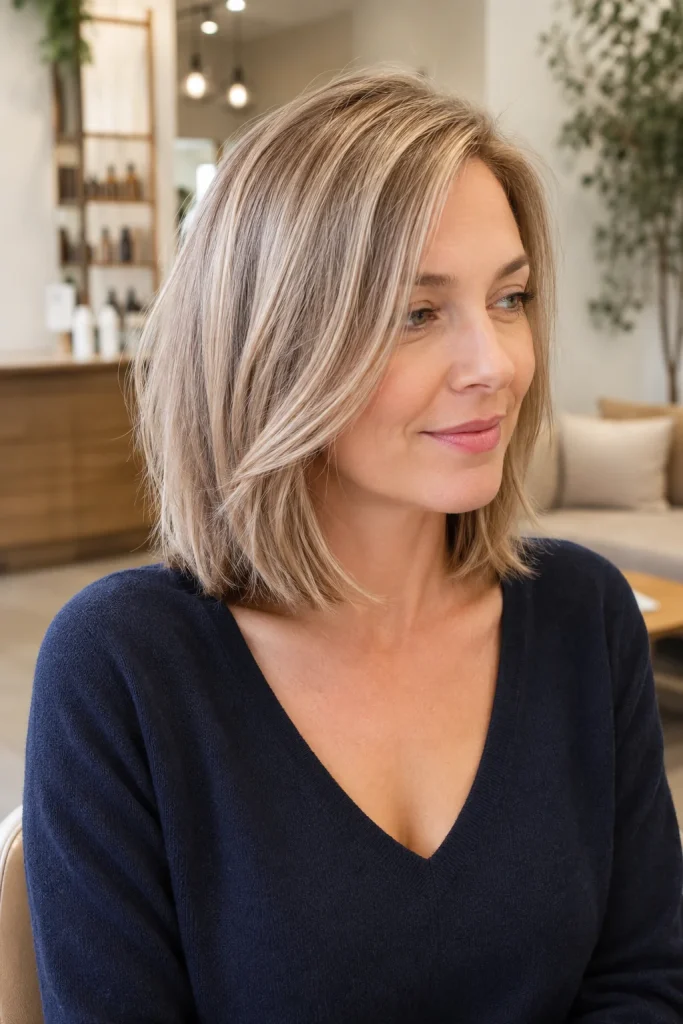
A lob usually falls between the jaw and collarbone. It is a practical choice for fine hair because it keeps enough length for tying back while still creating a fuller perimeter.
For many people, the most flattering point is somewhere between the shoulders and collarbone. This length removes weak ends without feeling dramatically short.
A lob works particularly well when the hair is fine but has moderate or high density. It can also suit someone who wants a lower-maintenance grow-out than a short bob.
A blunt or softly textured perimeter usually makes the ends look strongest. Light face-framing pieces can add movement, but the lower half should retain enough weight.
Be careful with a lob that ends directly on the shoulders. The hair may flip outward where it touches clothing. Some people like that movement, while others find it frustrating. Cutting slightly above or below the shoulder may give the style a more predictable shape.
Why Shoulder-Length Hair Can Be Tricky
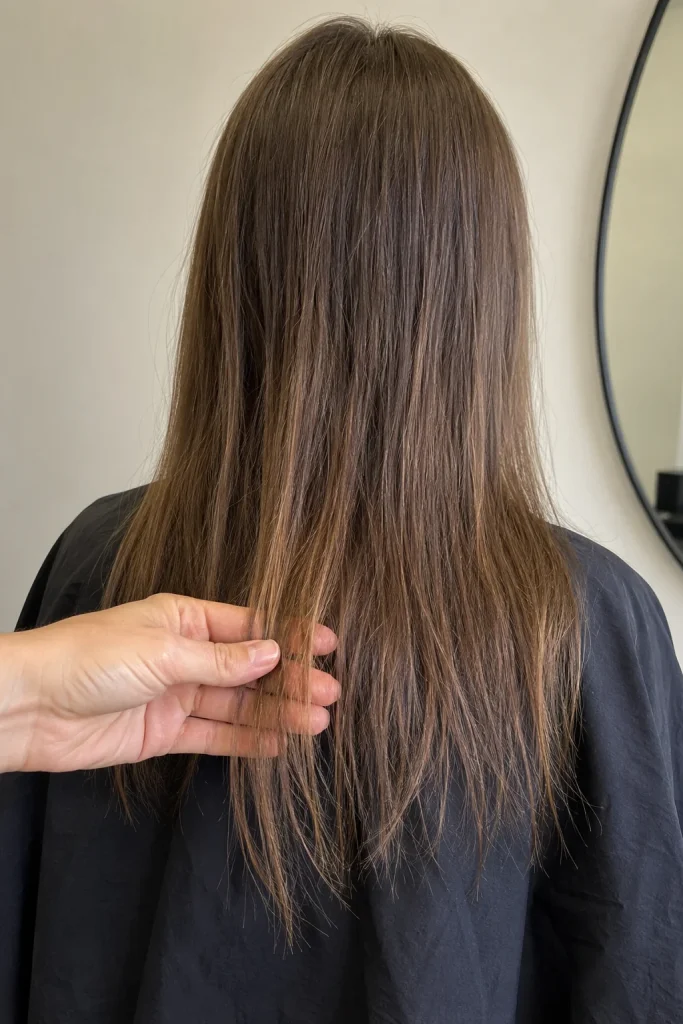
Shoulder-length hair is often described as easy and versatile, but it can behave differently depending on the exact cut.
At this length, the ends frequently rest against the shoulders, collars and jackets. That contact can make the hair flick outward or lose its smooth shape.
Fine hair may also begin to look flatter at this point if the cut includes too many layers. The hair is long enough to carry some weight, but not always long enough for the layers to blend softly.
Shoulder-length hair can still work very well when the perimeter remains strong. It is often a good option for someone who wants to tie the hair back without keeping damaged or sparse ends.
Ask your stylist to check whether the cut should sit slightly above the shoulder, directly on it or just below it. A difference of a few centimetres can change how the hair behaves.
When Collarbone-Length Hair Works Best
Collarbone-length hair is long enough to feel feminine and versatile but short enough to avoid some of the problems associated with very long fine hair.
It allows for ponytails, buns, half-up styles and soft waves. It can also create a clean line when the ends are kept relatively blunt.
This length often works well for fine hair with reasonable density. It gives the appearance of longer hair without placing as much weight on the roots.
Fine hair at the collarbone can handle some internal movement, but heavy layers may weaken the perimeter. Soft shaping around the face is usually safer than removing large amounts of hair throughout the back.
If your hair naturally waves, this length may help the pattern form without stretching it too much. If your hair is straight, the outline will be more visible, so regular trims become important.
Can Fine Hair Be Worn Long?
Fine hair can absolutely be worn long.
The question is whether your particular hair has enough density and strength to maintain a healthy-looking lower section.
Long fine hair often works best when:
- The overall density is moderate or high
- The ends remain relatively full
- Breakage is minimal
- The hair is not heavily bleached or chemically damaged
- The cut has a strong perimeter
- The layers are kept controlled
Long hair may become less flattering when the ends look transparent, the roots remain permanently flat or the hair tangles and breaks faster than it grows.
Keeping long hair simply because you are attached to the length can sometimes make the whole style appear thinner. Removing a few inches may create a much stronger shape without making the hair feel short.
If you want to keep your length, ask for a small trim and a fuller perimeter rather than dramatic layering.
How Long Layers Affect Fine Hair
Long layers can add movement without removing as much density as short layers.
They work best when the hair already has enough strands to support them. The layers should blend smoothly into the perimeter rather than creating obvious thin sections.
For fine hair, the shortest layer usually needs to remain longer than it would on thick hair. Short crown layers can create lift, but they may also leave the sides and ends looking sparse.
A stylist should consider where your hair naturally has the most density. Layers can then be placed where they create movement without exposing weaker areas.
If your ponytail becomes noticeably smaller after a layered haircut, too much weight may have been removed.
Why One-Length Cuts Often Look Fuller
A one-length cut keeps most of the hair at the same point, creating a stronger line through the ends.
This can make fine hair appear denser because the strands are not spread across several different lengths. It is especially effective on straight or softly wavy hair.
One-length does not have to mean completely flat or severe. The perimeter can be softened slightly, and subtle face-framing pieces can be added without turning the entire haircut into a layered style.
The main drawback is that a one-length cut may feel heavy or triangular on some textures. Fine wavy or curly hair may need a small amount of internal shaping to keep the style balanced.
A skilled stylist can preserve the density while preventing the cut from looking too solid.
Match the Length to Your Face Shape
Face shape can influence where a haircut looks most balanced, but it should not be treated as a strict rule.
A chin-length bob draws attention toward the jaw. A collarbone cut creates a longer vertical line. A pixie highlights the eyes, cheekbones and neckline.
If you have a round face, a bob that ends slightly below the chin may create more length than one that stops at the widest part of the cheeks. If your face is long, a chin-length or shoulder-length cut with some width at the sides may create balance.
A square jaw can look beautiful with a strong blunt bob, although soft face-framing pieces may create a gentler result. Heart-shaped faces often suit cuts with movement around the jaw and collarbone.
The most important question is not whether a length is officially recommended for your face shape. It is whether you like where the haircut draws attention.
Consider Your Neck and Shoulder Proportions
Hair length interacts with the neckline, shoulders and upper body.
A short bob exposes the neck and can create a clean, lifted appearance. Collarbone-length hair may soften the shoulder line. Very long hair creates a strong vertical effect but may overwhelm a smaller frame when the density is low.
Your clothing also affects how the haircut appears. A shoulder-length cut may constantly rub against jacket collars, scarves and high-neck tops. A shorter or longer cut may sit more comfortably if you wear those items often.
Look at your full reflection rather than focusing only on the hair. The best length should feel balanced with the rest of your proportions.
Choose a Length That Fits Your Routine
A flattering haircut should work on an ordinary morning, not only after a salon appointment.
Ask yourself how much styling you normally do.
A short bob may need regular blow-drying if your ends flip. A pixie may require a small amount of product each morning. Long fine hair may need careful detangling, heat protection and more time to dry.
A lob is often practical because it can be worn down or tied back. One-length shoulder hair may require less styling than a heavily layered cut, but it may still need shaping if it dries against the shoulders.
Tell your stylist what you realistically do at home. If you usually air-dry your hair, the cut should work with your natural texture. If you enjoy using hot tools, you may have more flexibility.
Do not choose a length that depends on a routine you are unlikely to maintain.
Consider How Often You Want to Visit the Salon
Shorter, more structured cuts usually need more frequent maintenance.
A pixie can lose its shape quickly around the ears and neckline. A chin-length bob may begin to sit differently once it grows past the jaw. A lob usually grows out more softly and may allow longer gaps between appointments.
Long hair may need fewer shape-maintenance appointments, but the ends still require attention. Waiting too long between trims can leave fine hair looking increasingly thin through the lower section.
Choose a length that matches both your budget and your willingness to schedule appointments.
A beautiful cut that feels demanding can become frustrating once it starts growing out.
Think About Your Styling Preferences
The way you like to wear your hair should influence the length.
If you regularly wear ponytails or buns, make sure enough hair reaches the elastic comfortably. A short bob may require clips or pins when you want it off your face.
If you enjoy wearing your hair down, a strong bob or lob may create a polished shape with minimal effort.
If you frequently curl your hair, remember that curls make the finished length appear shorter. A bob that sits at the chin when straight may rise closer to the cheeks once curled.
If you prefer sleek styles, avoid a length that constantly flicks against the shoulders. If you like natural texture, choose a point where your waves or curls form well without becoming stretched.
Hair Colour Can Affect the Best Length
Colour processing changes the condition and strength of fine hair.
Bleached or heavily highlighted ends may become more fragile over time. Even when the hair continues growing, the lower section may break and lose density.
A shorter length can remove weakened ends and create a healthier-looking outline. This does not mean coloured fine hair must always be short, but the hair may need more regular trims and gentler processing.
Dimensional colour can make fine hair appear fuller, but maintaining length should not come at the expense of the strand condition.
Ask your colourist and stylist to work together when making a significant change. The haircut should support the condition of the coloured hair rather than hiding damage temporarily.
Fine Straight Hair and Haircut Length
Fine straight hair tends to reveal every detail of the cut.
Blunt perimeters usually appear especially strong because the strands fall into a clear line. Bobs, lobs and collarbone-length cuts can all work well.
Long fine straight hair may look sleek and elegant when the density is good. When the ends are weak, however, the lack of texture can make thin areas more noticeable.
Layers should be placed carefully because they will not be hidden by waves or curls. A small difference in length can create a visible step if the blending is poor.
For straight hair, precise cutting and regular perimeter maintenance are particularly important.
Fine Wavy Hair and Haircut Length
Fine wavy hair often benefits from enough length for the pattern to form, but not so much that the waves become stretched and flat.
A bob may create a lively, rounded shape, especially when the wave begins near the roots. A lob or collarbone cut often gives the hair enough room to bend while preserving fullness.
Too many layers may cause the ends to separate into thin pieces. Too little shaping may leave the hair bulky at the bottom and flat at the top.
The ideal cut often keeps a solid perimeter with a small amount of internal movement.
Ask your stylist to evaluate the hair when it is dry or close to its natural state. Wet fine waves can appear longer and straighter than they will once dry.
Fine Curly Hair and Haircut Length
Fine curly hair needs enough structure to protect the density while allowing the curl pattern to form.
Shorter cuts can create lift, but very short layers may cause the curls to separate and expose more scalp. Longer cuts may stretch the curls and reduce root volume.
A rounded bob, shoulder-length shape or collarbone cut can work well depending on the curl pattern and density.
Shrinkage should always be considered. Hair that reaches the shoulders when wet may sit much higher once dry.
The stylist should avoid removing too much weight from the ends. Fine curls often look fuller when the perimeter remains visible, even when some layering is needed for shape.
How to Use Reference Photos Properly
Reference photos are helpful, but they should be used to discuss details rather than copied without adjustment.
Choose examples with a hair texture and density reasonably close to yours. A cut shown on very thick hair may behave differently on fine strands.
Show your stylist what you like about each photograph. It may be the length, fringe, perimeter, face framing or amount of volume.
Also explain what you do not want. You might dislike thin ends, short crown layers, frequent styling or a neckline that needs constant trimming.
Your stylist can then adapt the inspiration to your hair rather than trying to recreate a result that depends on different density, extensions or professional styling.
Questions to Ask During Your Consultation
Ask your stylist where your hair currently looks most dense and where the ends begin to weaken.
Discuss whether removing length would improve the perimeter. Ask how the proposed cut will behave when air-dried and how often it will need trimming.
You may also ask:
- Will this length touch my shoulders and flip?
- Can I still tie it back?
- Will layers make my ends look thinner?
- How will the cut grow out?
- What styling will it need on an ordinary day?
- Is my hair strong enough to maintain this length?
A good consultation should include your routine, hair condition and expectations, not only your preferred photograph.
Signs Your Current Hair May Be Too Long
Your current length may not be supporting your fine hair when:
- The ends look transparent in natural light
- The lower section separates into thin pieces
- Your roots remain flat even after careful drying
- The hair tangles and breaks easily near the ends
- The style has no clear shape
- Your ponytail becomes much thinner toward the bottom
- The hair looks fuller immediately after a trim
- You avoid wearing it down because the ends look weak
These signs do not mean you need a dramatic haircut. Removing a few inches may be enough to restore a stronger shape.
Signs You May Be Able to Grow It Longer
You may be able to maintain more length when:
- The ends still look substantial
- Your density remains consistent through the lower section
- Breakage is minimal
- The roots do not feel excessively weighed down
- The hair stays manageable between trims
- Your natural texture still holds its shape
- You are willing to care for the ends gently
Growth should be assessed by the quality of the hair, not only by how long it has become.
A Practical Way to Choose Your Length
Begin by identifying the point where your hair looks healthiest and fullest.
Consider how much length you need for your usual hairstyles. Decide whether you prefer regular salon maintenance or a softer grow-out.
Look at your natural texture without heavy styling. Notice whether the roots are being pulled flat and whether the ends still sit together.
Then discuss a small, realistic change with your stylist. You do not always need to move from long hair to a pixie to see a difference. Cutting from below the chest to the collarbone, or from the shoulders to the jaw, may be enough to transform the shape.
It is often safer to shorten the hair gradually. You can always remove more once you see how the new length behaves.
FAQs
What haircut length makes fine hair look thickest?
A chin-length bob, lob or collarbone cut often makes fine hair look fuller because these lengths create a visible perimeter without placing too much weight on the roots. The best option still depends on your density, texture and the condition of your ends.
Is short hair always better for fine hair?
No. Short hair removes weight and may improve lift, but fine hair can also look beautiful at medium or long lengths. The hair needs enough density and strength to support the chosen length.
Does long fine hair always look thin?
Not necessarily. Long fine hair can look full when the overall density is good and the ends remain healthy. It tends to look thinner when breakage, heavy layering or low density causes the lower section to become sparse.
Should fine hair be cut above the shoulders?
Above-the-shoulder cuts often create a stronger outline and prevent the ends from rubbing against clothing. However, collarbone-length and longer styles can also work. Choose the point where your hair still looks substantial.
What is the lowest-maintenance length for fine hair?
A lob or collarbone-length cut is often manageable because it can be worn down or tied back and usually grows out softly. Maintenance also depends on your texture and whether the cut requires regular heat styling.
Are layers good for long fine hair?
Long, subtle layers can create movement when the hair has enough density. Heavy or short layers may leave the ends looking thinner. Ask your stylist to preserve the perimeter and remove as little weight as necessary.
How often should fine hair be trimmed?
There is no single schedule for everyone. Structured bobs may need more frequent shaping, while long hair may go longer between appointments. Trim when the ends begin to split, tangle, separate or lose their clean outline.
Final Thoughts
The best haircut length for fine hair is the one that preserves the strongest part of your density while fitting your real routine.
Short hair can remove weight and give the roots more freedom. Medium lengths can offer a full perimeter with enough versatility for everyday styling. Long hair can work when the strands remain healthy and the ends still look substantial.
Pay close attention to the condition of the lower section. Keeping extra length is not always helpful when the final inches look weak or transparent.
A good stylist can help you find the point where your hair appears fullest, behaves naturally and still feels like you. The goal is not to follow a strict rule for fine hair. It is to choose a length your hair can support beautifully.
