
How to Wear Oversized Clothes Without Feeling Swallowed Up
Oversized clothes can make an outfit feel relaxed, modern and comfortable, but there is a fine line between intentionally roomy and simply too big.
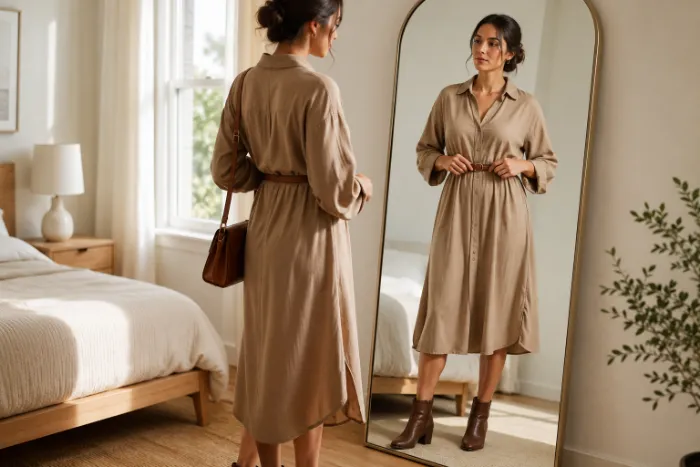
The problem usually appears when several loose pieces are worn together without anything defining the shape of the outfit. A long sweater covers the waist, wide trousers add more volume and a bulky coat removes whatever structure was left. The clothes may be stylish individually, yet the finished look feels heavy.
You do not need to avoid oversized shirts, blazers, sweaters or trousers. The key is deciding where the volume sits and giving the outfit one or two clear points of definition.
Oversized Should Still Look Like Your Size
An oversized garment is designed to have extra room. It should still fit properly in the areas that control its shape.
Check the neckline, shoulders, sleeves and overall length. A roomy shirt can have dropped shoulders, but the collar should sit neatly and the cuffs should not completely cover your hands. An oversized blazer may be broad through the body, but the sleeves and lapels should still look intentional.
There is a difference between buying an oversized design and choosing a regular garment several sizes too large.
A purposely oversized piece usually has proportions that work together. The sleeves, shoulders and hem are designed to create a relaxed silhouette. A standard item in the wrong size may sag around the neckline, bunch under the arms and hang unevenly.
When trying something on, look at the whole shape rather than relying only on the size label.
Let One Piece Carry Most of the Volume
The easiest way to wear oversized clothing is to choose one roomy piece as the focus.
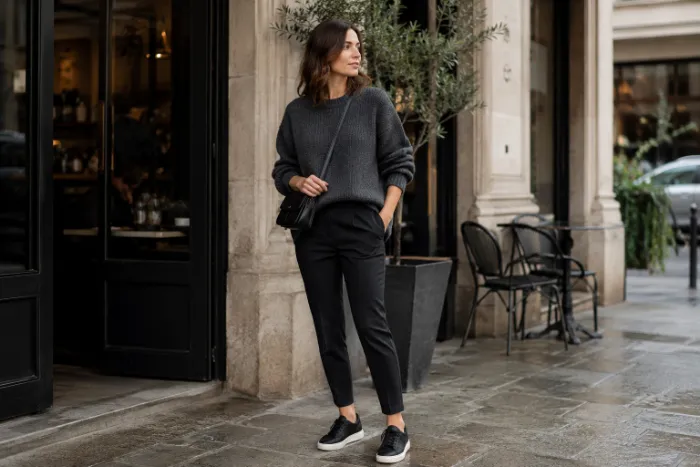
If you are wearing an oversized sweater, pair it with straight jeans, leggings or a narrower skirt. If your trousers are wide and relaxed, wear a top that sits closer to the body or has a shorter hem.
This creates contrast between loose and defined areas.
You can still wear an oversized top with wide trousers, but the outfit needs another form of structure. A visible waistband, fitted base layer or cropped outer layer can keep the combination from becoming one continuous block of fabric.
Start with one loose piece until you become comfortable balancing proportions. It is much easier to build an outfit around a roomy blazer than to manage an oversized blazer, shirt and trousers at the same time.
Keep Some Part of Your Shape Visible
An oversized outfit does not need to show your entire figure, but it helps to reveal at least one point of definition.
That might be your waist, wrists, ankles, neckline or the fitted layer underneath an open garment.
Push the sleeves of a roomy sweater or blazer slightly upward to show the wrists. Leave an oversized shirt open over a fitted tank. Wear cropped wide-leg trousers that reveal the ankle. Add a front tuck so the waistband remains visible.
These small areas prevent the fabric from completely taking over the outfit.
You do not have to create a fitted silhouette. A little separation between your body and the oversized garment is enough to show that the volume is intentional.
Use a Front Tuck to Break Up the Fabric
A front tuck is useful when a long or oversized top makes the outfit feel shapeless.
Tuck a small section of the shirt or sweater into the centre of the waistband. Allow the sides and back to remain loose.
This reveals the waist without changing the relaxed feeling of the top. It also helps show where the trousers or skirt begin, which makes the proportions easier to read.
For thick sweaters, tuck only a small amount of fabric. Forcing a heavy knit into the waistband can create a bulky lump around the stomach.
A side tuck can work as well, particularly with soft shirts and lightweight knits. The slightly uneven shape often feels more natural than a perfect full tuck.
Choose a Shorter Oversized Top
Oversized does not always have to mean long.
A boxy sweater or relaxed T-shirt that ends near the waistband can give you plenty of room without covering your entire shape. This works especially well with high-waisted jeans, trousers and skirts.
The top does not need to expose your stomach. It can meet the waistband or finish a few centimetres below it.
A shorter hem keeps the legs visible and prevents the outfit from looking top-heavy.
If you already own a long oversized top, try folding the hem inward to test a shorter length. You may find that the width works well once the extra length is removed.
Wear a Fitted Base Layer Underneath
A fitted inner layer gives an oversized outfit a clear foundation.
Wear a close-fitting tank, T-shirt, bodysuit or fine knit beneath an open shirt, cardigan or blazer. The outer piece can remain relaxed while the inner layer shows the shape of the torso.
This works particularly well with oversized tailoring. A large blazer feels less bulky when worn over a simple fitted top rather than another loose shirt.
A fitted base also makes it easier to remove the outer layer without leaving yourself in an outfit that feels unfinished.
Choose a base layer that is comfortable rather than restrictive. The aim is to create contrast, not to squeeze yourself into something tight.
Pay Attention to the Shoulder Line
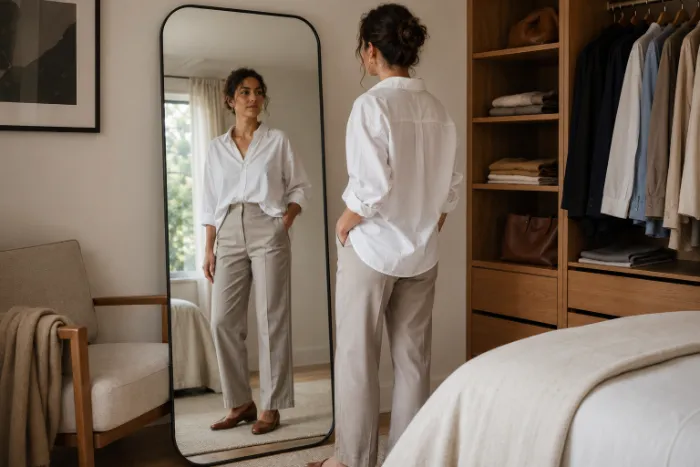
The shoulders determine how an oversized top or jacket hangs.
Dropped shoulders are common in relaxed designs, but they should fall evenly. If one side collapses or the neckline keeps shifting, the garment may be too large rather than intentionally oversized.
A blazer with slightly structured shoulders can make a loose outfit feel polished. The structure creates a clear upper line even when the body of the jacket is roomy.
Soft sweaters and shirts do not need strong shoulders, but they should still sit neatly around the neck.
If an oversized piece makes your upper body feel especially broad, choose one with softer fabric, narrower lapels or less volume through the sleeves.
Control the Sleeve Length
Long sleeves can make oversized clothes feel heavier than they are.
When the cuffs cover most of your hands, the garment may look borrowed or poorly fitted. Pushing up the sleeves exposes the wrists and removes some of the visual weight.
You can also fold shirt cuffs once or twice. Keep the roll relaxed rather than making it perfectly stiff.
For blazers and coats, tailoring the sleeve length can make a major difference. The body can remain oversized while the sleeves fit properly.
Correct sleeve length often makes an inexpensive oversized piece look much more intentional.
Balance Wide-Leg Trousers With the Right Top
Wide-leg trousers already create plenty of volume below the waist, so the top should help define the upper half.
A fitted knit, tucked T-shirt, bodysuit or cropped jacket usually works well. A lightweight button-down can also work when tucked or tied at the waist.
If you prefer a loose top, keep the fabric soft and avoid a hem that lands at the widest part of the trousers.
An oversized blazer can look excellent with wide-leg trousers when the inner layer is fitted and the waistline remains visible. This creates a relaxed suit effect rather than one large shape.
The footwear matters too. A shoe with some structure helps support the width of the trousers.
Wear Oversized Shirts Open
An oversized button-down can become much easier to style when worn as a light outer layer.
Leave it open over a fitted tank, camisole or T-shirt. Pair it with jeans, shorts, leggings or a slim skirt.
The open front creates two vertical lines that make the outfit appear longer and less bulky. It also allows the base layer to provide shape.
Roll the sleeves and keep the rest of the outfit simple.
This works with cotton, linen, denim and lightweight flannel shirts. The fabric should move easily rather than standing stiffly away from the body.
Tuck an Oversized Shirt Properly
A full tuck can work with an oversized shirt, but the fabric needs to be managed carefully.
Tuck the shirt evenly around the waistband, then pull out a small amount so it remains relaxed. Smooth the fabric rather than allowing it to collect in one large section.
High-waisted trousers and skirts usually make this easier because they provide more space for the tuck.
For thicker shirts, a front tuck may be more comfortable. You can also leave a few lower buttons open and tie the ends loosely at the waist.
The goal is to preserve the roomy feeling while giving the shirt a clear stopping point.
Choose Oversized Blazers With Some Structure
An oversized blazer can make a basic outfit look polished, but too much fabric can overwhelm the body.
Look for a blazer with a clean shoulder line, straight lapels and sleeves that can be pushed up or altered. The fabric should hold its shape without feeling stiff.
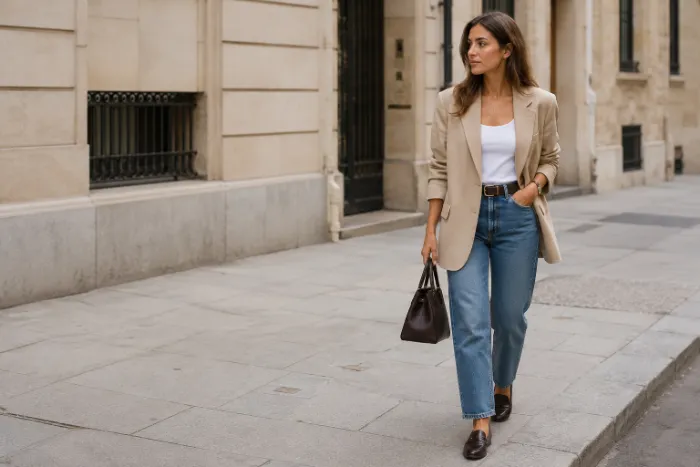
Wear it over a fitted tank, T-shirt or fine knit. Straight jeans, slim trousers, leggings and fitted dresses all create useful contrast.
An oversized blazer can also work with wide trousers, but keep the inner layer simple and fitted.
If the blazer is long, make sure the hem does not fall at an awkward point on the legs. A slightly shorter style may be easier if you are petite or prefer more visible leg length.
Keep the Base Outfit Simple
Oversized clothes already create a strong silhouette, so the rest of the outfit does not need much complication.
Start with a simple base such as a fitted top and jeans, a plain dress or a monochrome combination. Add the oversized piece afterward.
A quiet colour palette allows the proportions to remain the main focus. Neutrals, denim and tonal outfits are particularly easy to balance.
You can still wear prints or bright colours. It often works best when only one loose piece carries the bold pattern.
Too many strong details can make the outfit feel busy as well as bulky.
Try a Monochrome Outfit
Wearing similar colours from head to toe can help oversized clothes feel longer and cleaner.
Black trousers with a black top and charcoal blazer create one continuous line. Cream jeans, a beige knit and camel coat can have the same effect in lighter shades.
The colours do not need to match exactly. Slight differences make the outfit feel layered rather than flat.
Use texture to separate the pieces. Knitwear, denim, cotton, leather and wool can all create contrast within the same colour family.
A monochrome base is especially useful when the outer layer is very roomy.
Use a Belt Carefully
A belt can bring shape back to an oversized dress, blazer, shirt or sweater.
Place it at your natural waist or slightly higher, depending on the garment. A slim belt gives gentle definition, while a wider belt changes the shape more noticeably.
Avoid tightening the belt so much that the fabric bunches heavily around it. The garment should still fall softly.
Belting an oversized blazer can create a strong, dressed-up silhouette. Belting a loose shirt dress can make it more wearable without removing its comfort.
Not every oversized piece needs a belt. Sometimes a tuck or shorter layer creates a cleaner result.
Choose the Right Trouser Rise
The rise of your trousers affects how an oversized top sits.
High-waisted trousers make it easier to tuck a long shirt or sweater and keep the waistline visible. They also help balance cropped, boxy tops.
Mid-rise trousers can work well when the top ends near the waistband. Low-rise styles may create a longer torso and make a very long top feel heavier.
Choose the rise that feels comfortable and works with the lengths you wear most often.
The waistband should sit smoothly. If it folds, rolls or disappears completely beneath the fabric, the outfit may lose some of its structure.
Let the Legs Show Under Long Tops
A long oversized sweater, shirt or sweatshirt often looks best with a more streamlined bottom.
Leggings, slim trousers, straight jeans and narrow midi skirts allow the legs to remain visible beneath the volume.
This prevents the whole outfit from appearing equally wide.
You do not have to wear skin-tight bottoms. Straight-leg trousers can provide enough contrast while still feeling relaxed.
If you want to wear a long top with wide trousers, consider adding a belt or leaving the shirt open over a fitted base.
Wear Oversized Clothes With Skirts
Oversized tops can work beautifully with skirts when the proportions are clear.
Pair a roomy sweater with a straight midi skirt, slip skirt or fitted knit skirt. Tuck a small section at the waist or choose a sweater that ends near the waistband.
A loose shirt can be tucked into an A-line skirt, while an oversized blazer can sit over a fitted mini or midi dress.
When both the top and skirt are full, the outfit may need waist definition. A belt, fitted inner layer or cropped jacket can help.
Pay attention to where the skirt begins and where the top ends. Those two points control the shape of the outfit.
Pick Shoes With Enough Presence
Delicate shoes can sometimes look too small beneath a very oversized outfit.
Chunky loafers, clean sneakers, ankle boots and platform sandals can balance wide trousers, long coats and bulky knits.
This does not mean every outfit needs heavy footwear. Sleek shoes can work when the clothing has softer volume or the ankles remain visible.
Look at the visual weight of the outfit. A thick sweater with wide jeans may need a more substantial shoe than a loose cotton shirt with slim trousers.
The shoes should support the silhouette rather than disappear underneath it.
Show the Ankles When Possible
Showing a little ankle creates space between oversized clothing and footwear.
Cropped trousers, rolled jeans and midi skirts can all prevent the outfit from feeling too heavy.
This is particularly helpful when wearing flat shoes. The exposed ankle separates the hem from the shoe and gives the lower half more definition.
Avoid rolling trousers into a thick bundle. One or two clean folds are usually enough.
During colder weather, you can create a similar break with fitted boots that sit neatly beneath the hem.
Use Vertical Lines
Vertical lines help break up the width of oversized clothing.
An open blazer, shirt or cardigan creates long lines through the centre of the outfit. A long pendant, scarf or row of buttons can have a similar effect.
Pinstripes and vertical ribbing also guide the eye downward.
You do not need to avoid horizontal details completely. The point is to add some length when the outfit has a lot of width.
Open layers are one of the easiest ways to create this effect without changing the clothes underneath.
Avoid Too Many Heavy Fabrics Together
Oversized outfits can become bulky when every piece is made from thick material.
A chunky knit, heavy denim, padded coat and large boots may create more volume than you want.
Mix heavier pieces with lighter ones. Wear a chunky sweater with smooth trousers, or pair wide denim with a soft cotton shirt.
A lightweight fitted layer beneath a heavy coat can keep the outfit comfortable and balanced.
Texture adds interest, but the fabrics should not all compete for space.
Choose Prints in the Right Scale
Large prints can add even more visual volume to an oversized garment.
This can look bold and stylish, but it may feel overwhelming if the shape is already dramatic.
Smaller or more widely spaced prints often sit more quietly on roomy pieces. Vertical stripes can also help lengthen the silhouette.
When wearing a large printed oversized shirt or dress, keep the remaining pieces simple.
Let the print become the focus rather than adding several other patterns and large accessories.
Be Careful With Long Coats
A long oversized coat can look elegant, but the length and shoulder shape matter.
Choose a coat that falls cleanly rather than spreading outward. A straight or softly tailored cut usually creates a longer line.
Keep the clothing underneath relatively simple. A fitted knit with straight trousers allows the coat to remain the main source of volume.
If both the coat and trousers are wide, make sure the inner layer defines the waist or torso.
The sleeves should fit properly, even when the rest of the coat is roomy. Adjusting the sleeve length can completely change the result.
Oversized Dresses Need One Clear Shape
A loose dress can be comfortable and stylish, but it should have some design feature controlling the volume.
This may be a defined shoulder, shaped neckline, curved hem, waist seam or structured fabric.
If the dress is completely loose from shoulder to hem, add shape with a belt, jacket or crossbody bag worn across the body.
Footwear can also give the dress more structure. Boots, loafers and substantial sandals usually balance a roomy dress better than very delicate shoes.
Choose a length that suits the volume. A very wide dress may feel lighter when it finishes above the ankle rather than pooling around the feet.
Do Not Hide Behind Every Layer
Oversized clothes can feel safe because they cover more of the body, but wearing several concealing layers may make you feel less confident rather than more comfortable.
Try to keep one part of the outfit open or defined.
That may mean leaving the jacket open, showing the neckline, rolling the sleeves or choosing trousers that follow the leg more closely.
You are not required to emphasize any specific body part. The aim is simply to give the outfit breathing room.
Clothes should feel like they are working with you rather than surrounding you.
Consider Your Height, but Do Not Follow Strict Rules
Petite women are often told to avoid oversized clothing, but the real issue is proportion rather than height.
A shorter oversized blazer, cropped boxy sweater or neatly cuffed shirt can work beautifully on a smaller frame. Keeping the waist or ankles visible often helps.
Taller women may be able to carry more length, but very large pieces can still feel shapeless without definition.
Your body proportions matter more than a general height rule. Someone with a longer torso may prefer longer tops, while someone with shorter legs may feel better in higher rises and shorter hems.
Try different lengths and notice where the garment looks intentional on you.
Keep Accessories Proportionate
Accessories should support the scale of the clothes.
A tiny bag may look lost beside a very large coat, while an oversized tote can add even more bulk to an already roomy outfit.
A medium structured bag is often the easiest choice. It gives the outfit definition without competing with the clothes.
Jewellery can remain simple. Oversized outfits do not automatically need large statement pieces.
Small hoops, a watch or a clean necklace may be enough. The silhouette already provides plenty of visual interest.
Keep the Outfit Neat
Oversized clothing looks best when the fabric is clean, smooth and in good condition.
Wrinkles, stretched cuffs and pilling can make a roomy garment look careless rather than relaxed.
Steam shirts, blazers and trousers before wearing them. Use a fabric shaver on knitwear and check whether the neckline still holds its shape.
Lint is especially visible on large dark garments because there is more fabric on display.
The outfit does not need to look perfect, but the pieces should feel cared for.
Create Reliable Oversized Outfit Formulas
A few dependable combinations make oversized clothes easier to wear.
An oversized blazer, fitted tank, straight jeans and loafers work for many casual plans.
A roomy sweater, narrow midi skirt and ankle boots create a comfortable cold-weather outfit.
A large button-down, fitted T-shirt, leggings and clean sneakers make an easy everyday combination.
Wide-leg trousers, a close-fitting knit and cropped jacket balance volume without feeling restrictive.
Once you find a formula that works, repeat it with different colours and fabrics.
What to Check in the Mirror
Look at the full outfit rather than focusing only on the oversized piece.
Ask whether the waistline, wrists, ankles or fitted base layer are visible. Check whether every garment is loose and whether one could be changed for a more defined option.
Look at the sleeve and trouser lengths. Make sure the footwear has enough presence for the volume of the clothes.
Check the side view as well. Oversized garments can appear very different from the side, particularly when thick fabric gathers at the back or waist.
Remove one layer or adjust one proportion before adding more accessories.
FAQs
Can I wear an oversized top with wide-leg trousers?
Yes. Keep the waistline visible with a tuck, shorter hem or fitted base layer. Shoes with some structure can also help balance the volume.
How do I wear oversized clothes if I am petite?
Choose oversized pieces with controlled length, correct sleeves and a clear shoulder line. Showing the waist, wrists or ankles can prevent the clothes from overwhelming your frame.
Should oversized clothes be one size bigger?
Not necessarily. Many garments are already designed with an oversized fit. Buying your regular size often gives the intended shape. Always judge the shoulders, sleeves and length rather than relying only on the label.
What trousers work best with an oversized sweater?
Straight jeans, leggings, slim trousers and narrow skirts are easy choices. Wide trousers can also work when the sweater is tucked, cropped or paired with a visible waistband.
How do I make an oversized blazer look feminine?
Wear it over a fitted top, show the waist or wrists and pair it with trousers, jeans, a skirt or dress that creates some contrast. Jewellery and a structured bag can soften the look further.
Can oversized clothes still look polished?
Yes. Good fit at the neckline and sleeves, balanced proportions, clean footwear and well-maintained fabric can make oversized clothes look very polished.
Why do oversized clothes make me look wider?
The outfit may have too much volume in every area or the garment may end at an unhelpful point. Try showing the waist, changing the hem length, opening the outer layer or pairing the piece with something more streamlined.
Final Thoughts
Wearing oversized clothes successfully is not about hiding your shape or following strict body rules.
The most important step is controlling where the volume sits. Let one piece be roomy, then use a tuck, fitted layer, shorter hem or visible wrist to give the outfit definition.
Pay attention to shoulders, sleeves and fabric. An oversized garment should still look deliberately chosen for your body.
Once the proportions feel balanced, oversized clothes can be some of the most comfortable and useful pieces in your wardrobe. They can look relaxed without feeling careless and roomy without making you disappear inside the outfit.
