
How to Find Your Style and Finally Make Your Closet Feel Like You
Finding your personal style sounds so simple until you open your closet and realize you have a romantic dress, a sharp blazer, three versions of the same white top, and one wildly optimistic pair of shoes that has never seen daylight. Suddenly, choosing an aesthetic feels less like fashion and more like a personality exam you forgot to study for.
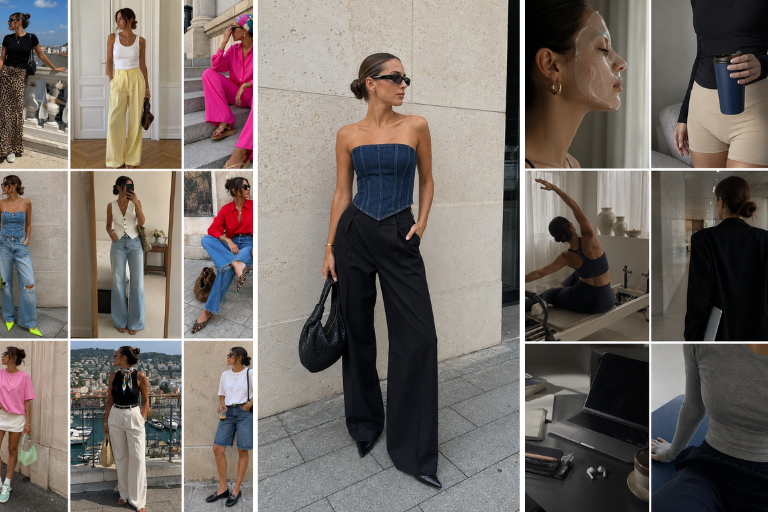
The good news? You do not need one perfect label. Learning how to find your style is really about noticing patterns: what you save, what you repeat, what feels good on your body, what works for your actual life, and which details make an outfit feel unmistakably yours.
So forget the pressure to wake up tomorrow as a fully formed “minimalist girl” or “boho girl.” Your style can have range. It just needs a point of view.
Start with evidence, not an aesthetic label
Before you decide what your style is, pay attention to your immediate reactions. What do you love? What makes you scroll right past? What would you admire on someone else but never want on your own body? Your no’s are just as useful as your yeses.
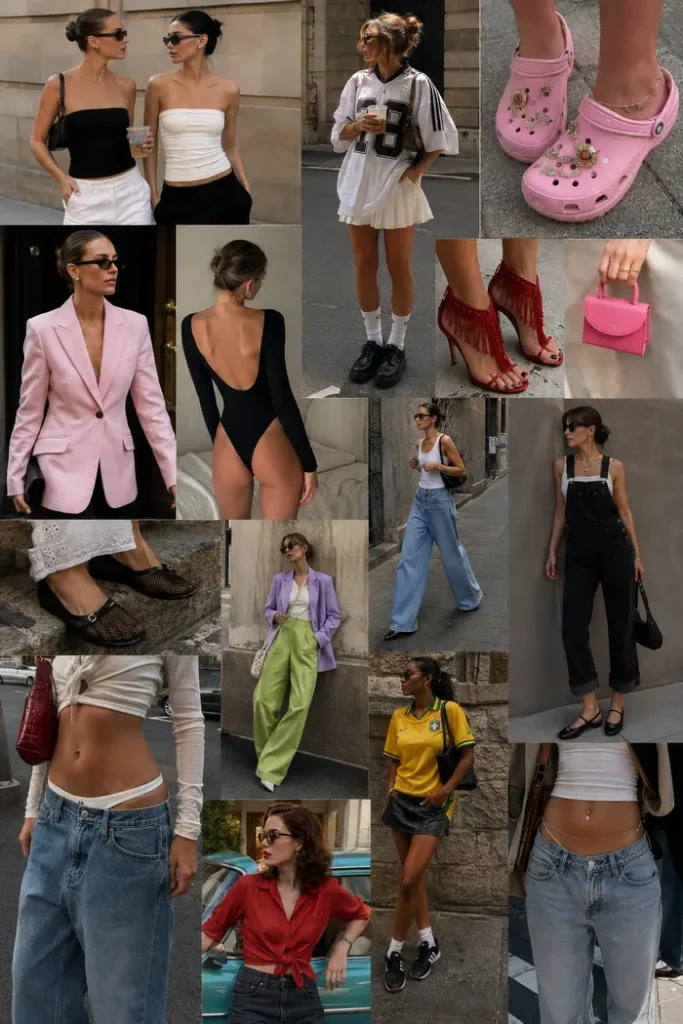
If the pastel blazer feels exciting but the jeweled clogs do not, note it. If the loose denim feels very you but the ultra-dressy heel feels like costume, note that too.
Then pay attention to your fashion envy. Not the kind that makes you want somebody else’s entire life, just the tiny outfit moments that make you think, “Wait, I would actually wear that.”
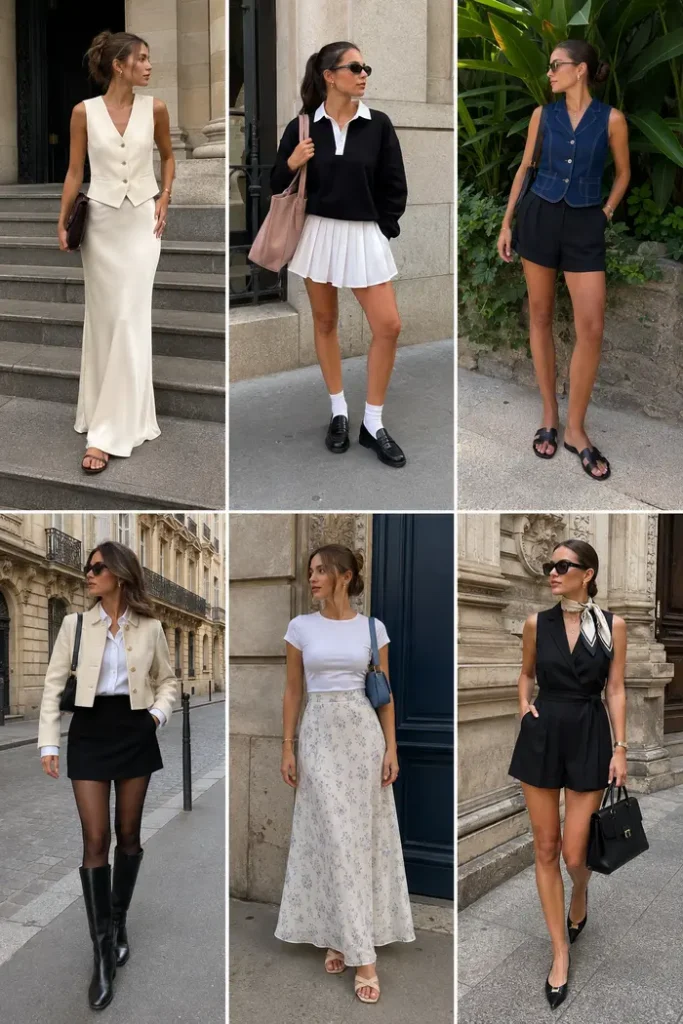
The looks here are different, but they share clues you can steal: clean lines, a controlled palette, waist definition, simple shoes, and pieces that look intentional without being fussy. Maybe you keep saving long cream skirts. Maybe it is crisp black-and-white dressing, loafers, little jackets, or tailored shorts. The repeated ingredient matters more than the name of the aesthetic.
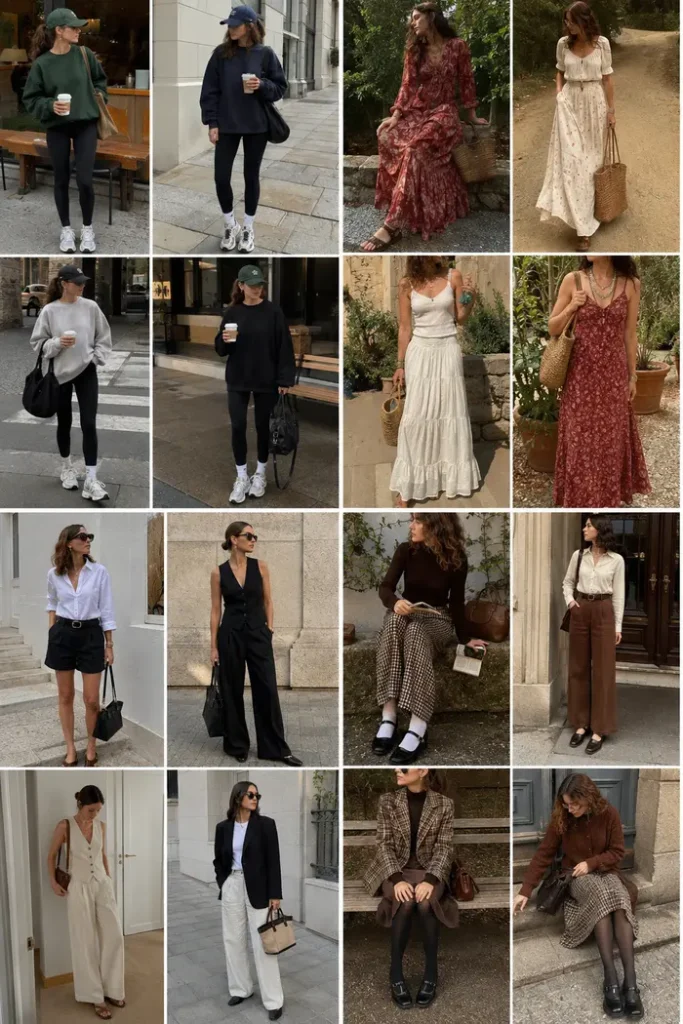
And yes, you are absolutely allowed to like more than one style world. This mood board jumps from sporty leggings and caps to floaty romantic dresses, sharp black-and-white tailoring, and cozy brown checks. That is not a style crisis. It might simply mean your core words are something like relaxed, feminine, and polished, with the mood shifting by season or occasion.
A much more useful exercise than choosing one internet aesthetic is picking three style words that describe how you want to feel when you get dressed. Keep them broad enough to grow with you. “Clean, soft, confident” will guide you better than a hyper-specific trend label that disappears by next month.
Pay attention to the details that frame you
Personal style is not only the clothes from your shoulders down. Hair, earrings, sunglasses, makeup, necklines, and even how much contrast you like around your face can completely change the mood of an outfit.
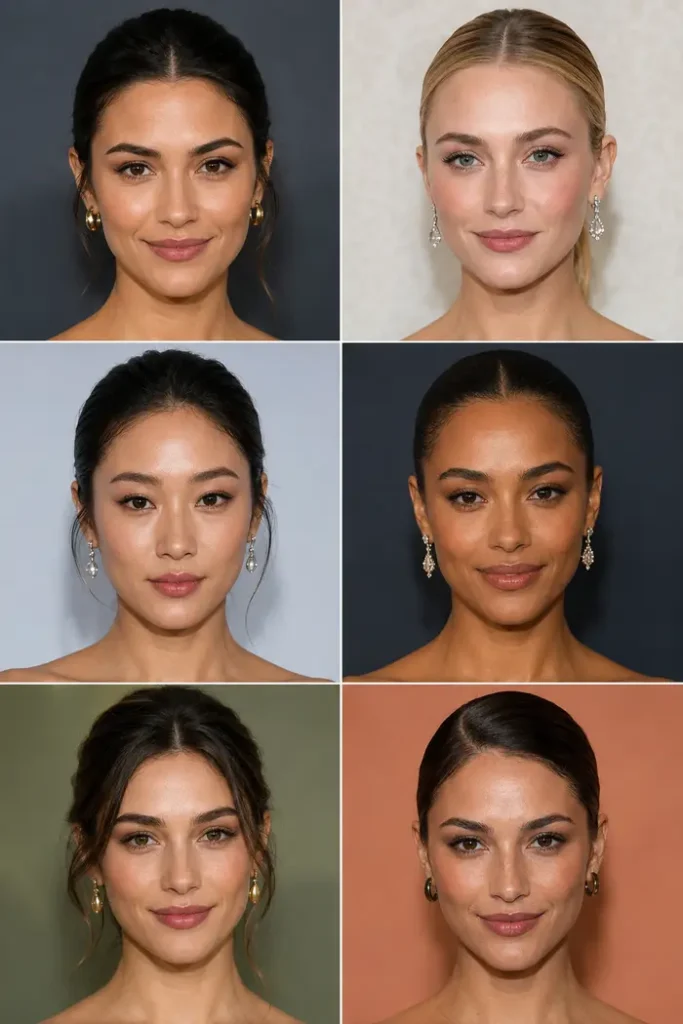
Look at how much personality comes through in these close-up beauty references. A sleek center part feels different from a softly undone updo. Gold hoops read differently from delicate crystal drops. Neutral makeup can still feel warm, sculpted, soft, glossy, or very polished. None of those choices is automatically better. The point is to notice which versions make you feel most like yourself.
Use that information when you shop. If you love sleek hair, narrow sunglasses, and simple gold jewelry, you may naturally enjoy cleaner clothes that let those details lead. If you always prefer soft hair, romantic earrings, and a gentler makeup finish, you may feel more at home in drape, movement, and softer fabrics.
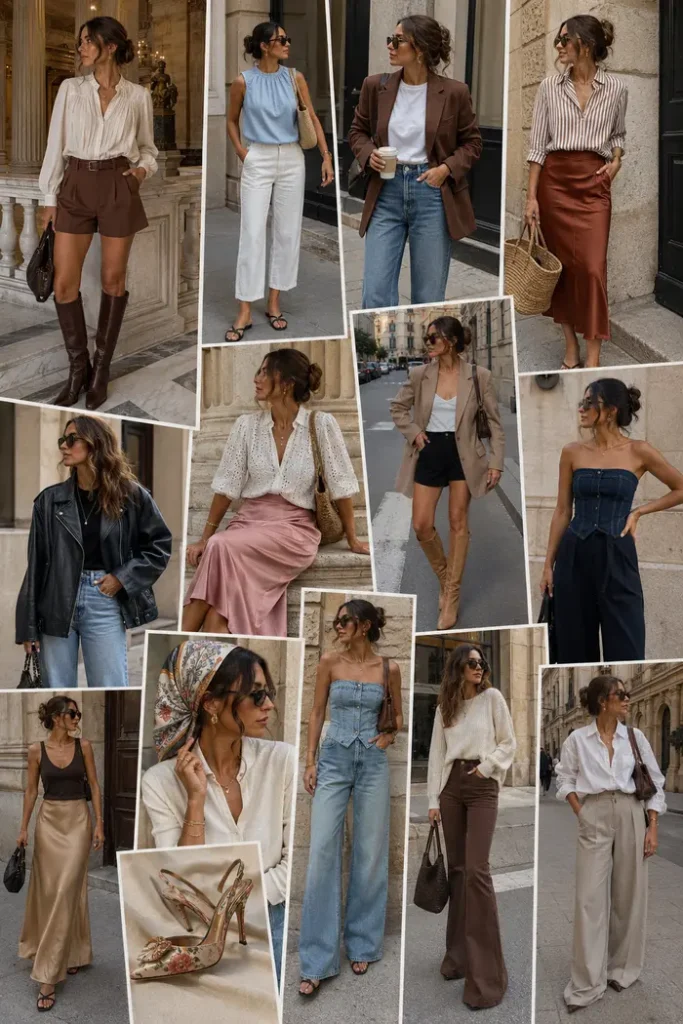
Texture is another huge clue. The warm-toned collage mixes crisp shirts, denim, leather, satin skirts, eyelet cotton, soft knits, and fluid trousers. Even when the colors stay fairly calm, the fabrics keep the outfits from feeling flat. Ask yourself which textures you reach for happily and which ones you tolerate for approximately twelve minutes before wanting to change.
This is where personal style gets practical. Loving a fabric in a photo is one thing. Loving how it feels against your skin, how it moves when you sit down, and how easy it is to care for is what turns inspiration into a real wardrobe.
Make sure your style survives more than one season
A personal style that only works in perfect 72-degree weather is a cute Pinterest board, not a functioning wardrobe. The real test is whether you can translate your favorite cues into summer, winter, workdays, weekends, and whatever your climate throws at you.
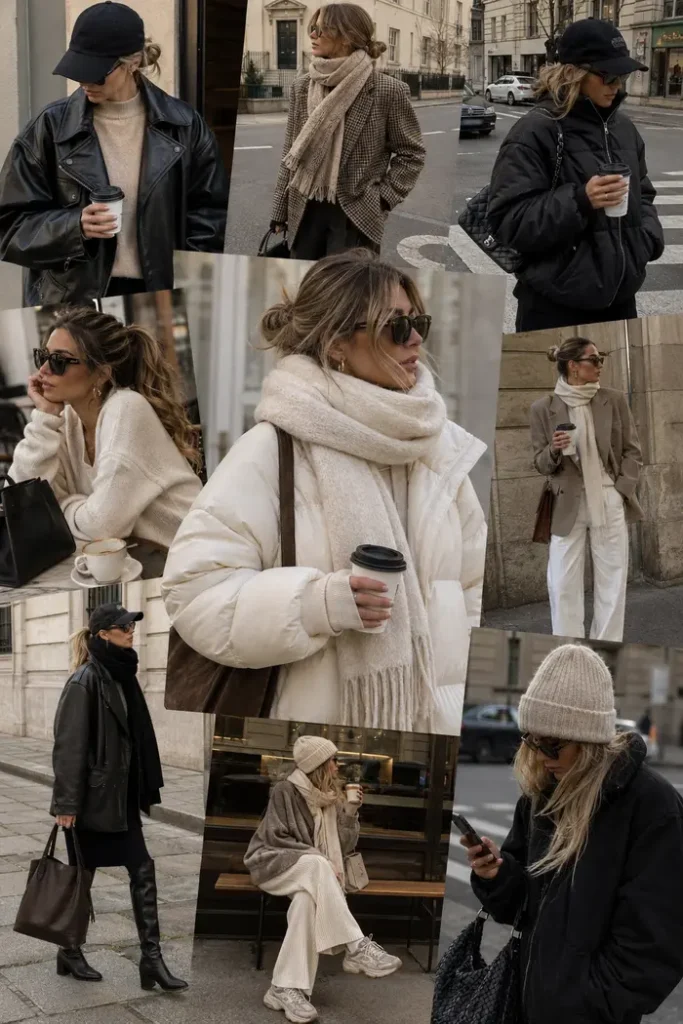
This winter board keeps a very clear identity even while the outfits change: black, cream, taupe, checks, oversized scarves, leather, puffers, relaxed tailoring, caps, beanies, and substantial bags. The individual pieces are seasonal, but the visual language stays consistent.
Try the same trick with your own wardrobe. If you love a sleek summer tank with wide-leg trousers, your cold-weather version might be a fitted knit with the same trouser shape and a long coat. If your signature is romantic dresses, winter might mean boots, a cardigan, and a wool coat instead of abandoning the look completely. Keep the mood, change the materials.
Audit your closet like it is evidence
Your current wardrobe knows more about your style than your saved folder does. The pieces you actually wear have already passed the comfort test, the confidence test, the laundry test, and the “can I leave the house in this” test. That is valuable information.
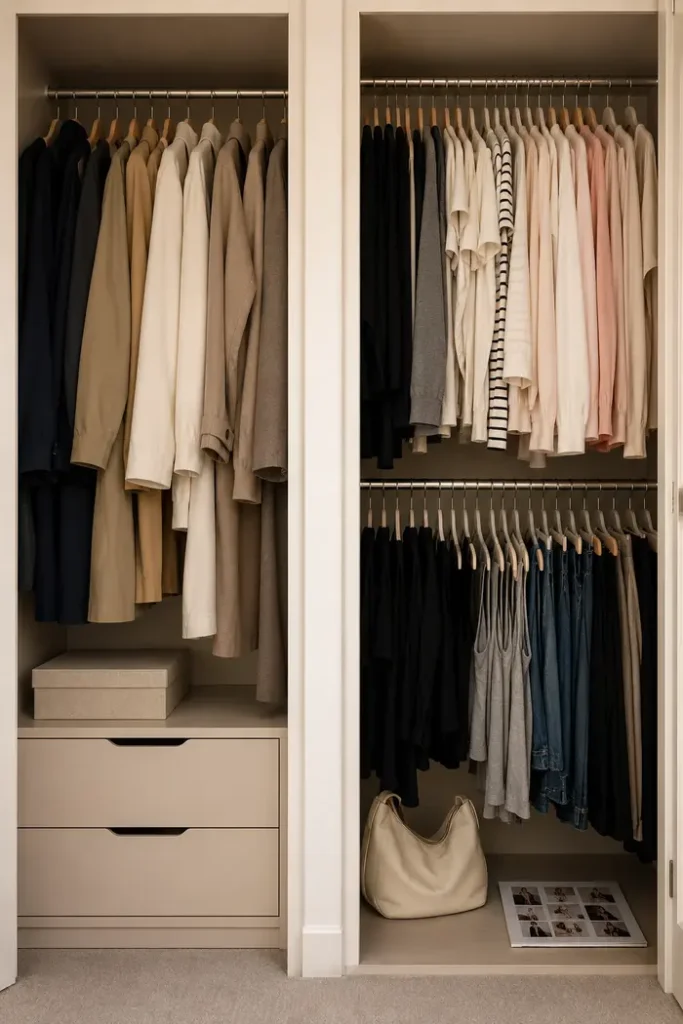
A beautifully edited neutral closet can look dreamy, but the lesson is not that everyone needs a beige wardrobe. The useful part is the repetition. Similar colors, compatible silhouettes, and pieces that can talk to one another make getting dressed easier.
Pull out the things you wear constantly and study them together. Do you keep choosing straight jeans, wide-leg trousers, cropped jackets, simple tanks, long skirts, button-downs, or chunky shoes? Are your favorite colors warm and earthy, dark and sleek, pale and soft, or bright and punchy? Then look at the neglected pieces. Was the fit wrong? The fabric annoying? The color hard to style? Or did you buy the fantasy version of your life again?
Do not panic-purge your closet because you are “finding yourself.” Make a small edit first. Keep a maybe pile, wear questionable pieces one more time, and let real outfits decide what stays.
Make your actual life the dress code
This is the part people skip because a fantasy wardrobe is much more fun than checking your calendar. But your best personal style has to work on a random Tuesday, not only for a rooftop dinner you attend twice a year.
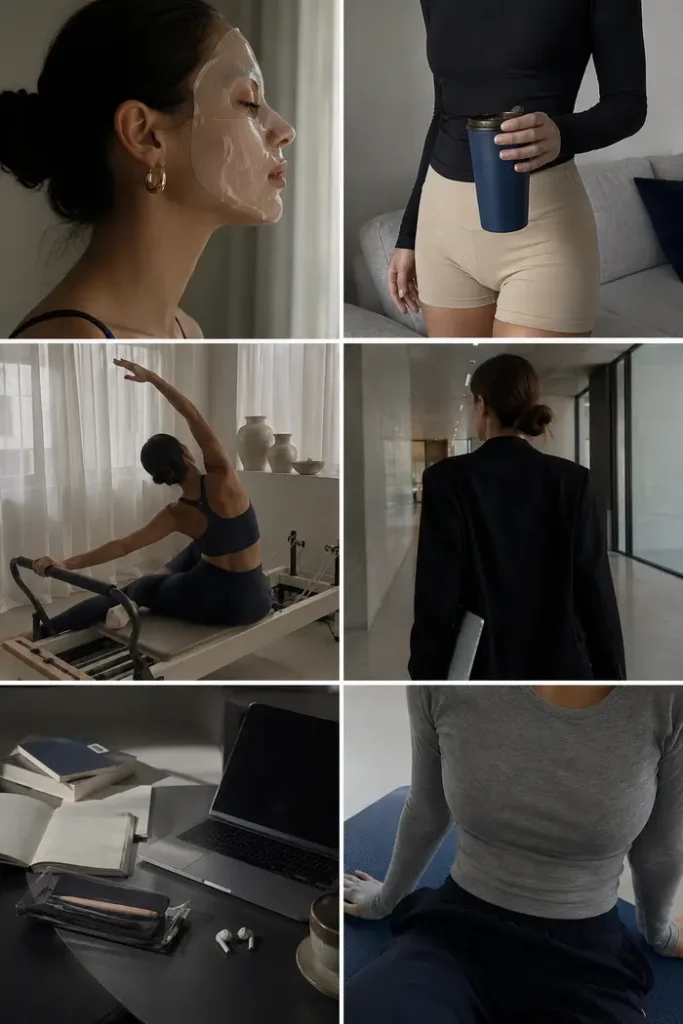
Your wardrobe has to support the life you already live, including the boring bits.
Think about where your week really goes. If you walk everywhere, shoes matter more than the fantasy heel collection. If you work from home, you may need polished knitwear and comfortable trousers more than ten office dresses. If you go out often, great jackets, easy evening tops, and bags that work after dark deserve more closet space.
Style becomes much easier when you stop shopping for imaginary occasions and start dressing your real routines beautifully.
Find one outfit formula that feels unmistakably you
Once you know your preferences, build a formula. Not a uniform, a formula. It gives you a reliable starting point while leaving plenty of room for color, texture, accessories, and mood.
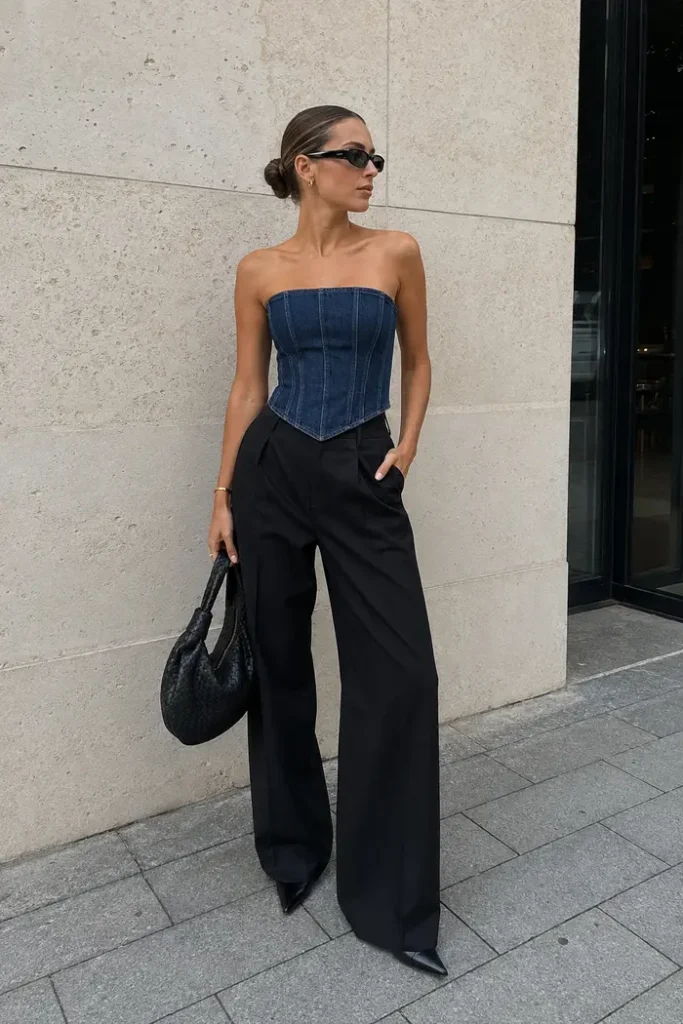
This look is a great example: a fitted denim corset top, high-waisted black wide-leg trousers, pointed shoes, a soft black bag, narrow sunglasses, and a sleek bun. The magic is in the contrast. Denim keeps the top casual, tailoring sharpens the trousers, and the pointed accessories pull everything together.
Your formula might be fitted top plus loose trousers plus sleek shoe. It might be oversized shirt plus mini skirt plus tall boot. It might be simple dress plus strong earring plus flat sandal. Start photographing the outfits that make you feel especially good. If certain combinations earn compliments too, notice that, but treat compliments as extra data, not the permission slip.
After a few weeks, you will probably see repeats. Those repeats are not boring. They are the beginning of a signature.
Build a mood board that tells you what to buy
A mood board should do more than look gorgeous on your phone. If it cannot help you make a shopping decision, it is decor. Pretty decor, yes, but still decor.
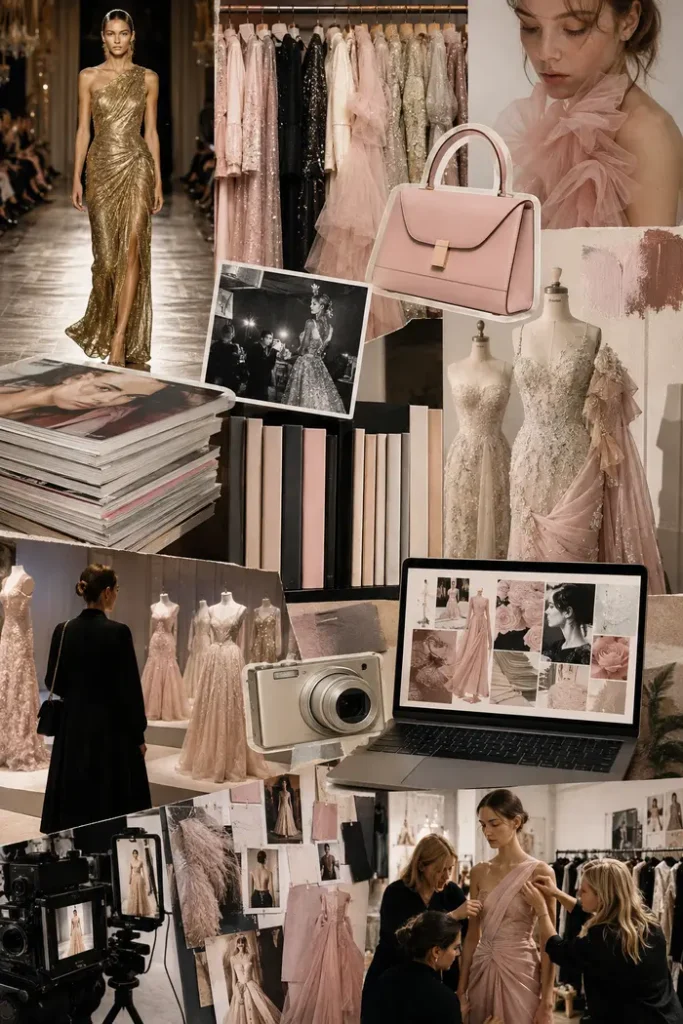
You do not need to buy a couture gown to use it. You could translate the mood into “romantic, refined, sculpted, soft pink, special details, clean accessories.”
Do the same with your own board. Save freely at first, then edit hard. Remove images you only like because the person, location, or photography is beautiful. Keep the ones where you genuinely want the clothes. Then write down the repeats you can shop for: silhouettes, colors, fabrics, shoe shapes, bag shapes, jewelry scale, and the level of dressiness.
That tiny translation step is what stops a mood board from becoming a collection of other people’s wardrobes and turns it into a plan for yours.
Signature details are where your style gets personal
Two people can wear the same white T-shirt and jeans and look completely different. The difference is usually the micro-styling: the bag, scarf, belt, shoe, jewelry, sunglasses, hair, and the little color choices that make the outfit feel owned rather than copied.

There are so many good examples here. A red structured bag wakes up a long white coat and pale denim. A printed scarf gives a black sleeveless top and cream trousers more personality. A pink cap changes the mood of a white suit. Burgundy, denim, leopard print, woven bags, sunglasses, and soft brown accessories keep repeating across otherwise simple outfits.
You do not need ten signatures at once. In fact, that is usually when an outfit starts yelling. Pick one or two details you genuinely love and repeat them enough that they become part of your visual language. Maybe it is a scarf at the neck, a sharp red bag, narrow sunglasses, gold hoops, ballet flats, chunky sneakers, or a particular lipstick. Repetition is how a detail starts to feel like yours.
Let trends audition for your wardrobe
Trends are fun. They are also very good at convincing you that a random item is suddenly essential because you saw it seventeen times before breakfast. Your personal style gets stronger when trends have to earn their place.
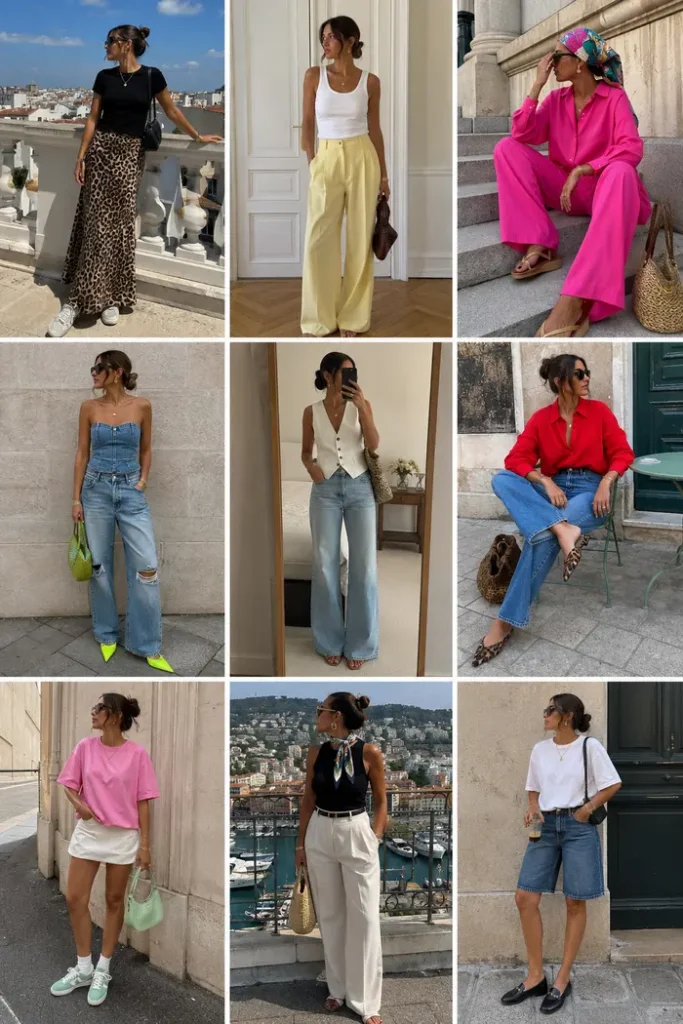
This outfit grid is full of very different trend-friendly ideas: a leopard maxi skirt, yellow wide-leg trousers, a hot-pink set, denim corsetry, a cream waistcoat, a red shirt with jeans, Bermuda shorts, and playful color-pop accessories. You do not need all of them. You only need the ones that connect with something you already know you love.
Before buying a trend piece, ask yourself four things. Would I still want this if I had not seen it all over social media? Can I style it with at least three things I already own? Does it fit my actual week? Does it match the three style words I chose earlier? If most of those answers are no, admire it from a safe distance and keep your card in your bag.
The best trends are the ones that slide into your wardrobe and somehow look like they were waiting for you.
The easiest personal style test to use before you buy
When you are standing in a fitting room trying to negotiate with a questionable top, skip the “but maybe someday” speech. Ask whether it fits your body comfortably right now, whether you can picture at least three real outfits with it, whether the fabric feels good, whether it suits your lifestyle, and whether you would be excited to wear it this week.
That last question is especially useful. A piece can be beautiful, flattering, and still not belong to you. Personal style is not about proving you can pull something off. It is about recognizing what you actually want to reach for.
FAQ: finding your personal style
Can you have more than one personal style?
Absolutely. Most people do. You might dress more polished for work, more relaxed on weekends, and more romantic when you go out. The goal is not to make every outfit identical. Look for the thread connecting them, such as your favorite proportions, colors, fabrics, or accessories.
How long does it take to find your style?
There is no finish line where a fashion fairy hands you a certificate. You can learn a lot in a few weeks by tracking outfits, editing saved images, and paying attention to what you repeat, but your style will keep changing as your body, lifestyle, budget, and taste change.
What if my style keeps changing?
Good. That means you are paying attention. Instead of rebuilding your closet every time your mood shifts, keep a stable base of pieces you genuinely love and let smaller things carry the change. Accessories, color, shoes, beauty choices, and one or two new silhouettes can refresh your look without starting from zero.
How do I know if something is really my style?
You will usually know by behavior, not by theory. You wear it without needing a special occasion, you can style it more than one way, you feel comfortable in it, and you keep choosing it even when nobody is watching. That is much stronger evidence than a trend label.
The goal is recognition, not a uniform
The best personal style does not make you feel trapped. It makes getting dressed feel clearer. You know which silhouettes make you stand taller, which fabrics you happily live in, which colors make your face feel alive, and which little details make a basic outfit feel finished.
So if your wardrobe currently feels like five different personalities sharing one rail, do not panic. Start noticing. Save what you love, question what you buy, repeat what works, and let the pattern reveal itself. Eventually, the most satisfying reaction will not be “Is this on trend?” It will be “Yep, that looks like me.”
