
How to Fall Asleep Quickly: 9 Cozy Habits for Nights When Your Brain Won’t Log Off
You know that deeply annoying bedtime plot twist where your body is exhausted, your pillows are perfect, the lights are off… and suddenly your brain wants to review every awkward thing you have said since 2014?
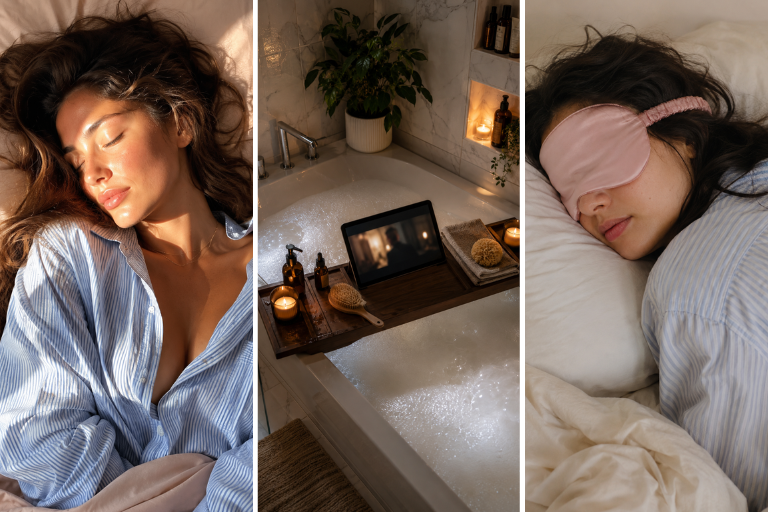
Yep. Nothing makes sleep feel more impossible than actively trying to make it happen. And while there is no magical button that guarantees instant Zzz’s, a few small changes can make your bedroom, evening routine, and actual bedtime way more sleep-friendly.
The goal is not to turn your night into a 14-step wellness project either. Please, we are tired enough. Think simple cues that tell your mind the day is officially done and make drifting off feel a whole lot less like a negotiation.
So, How Do You Fall Asleep Quickly? Start With These 9 Cozy Habits
1. Make Your Bedroom Boring in the Best Possible Way

If this champagne sleep mask, glossy satin bedding, and giant cloud of white duvet are making you sleepy just looking at them, that is exactly the energy we want.
Your bedroom should be giving absolutely nothing after dark: no bright lights, no phone flashing every three minutes, no random TV playing in the background. Keep the room comfortably cool, quiet, and as dark as you can. If streetlights insist on joining you in bed, an eye mask or heavier curtains can be such a simple upgrade.
And do not underestimate actual comfort. Fresh bedding, a pillow you are not fighting with all night, and pajamas that do not twist themselves into a rope around your waist can make bedtime feel infinitely more inviting.
2. Let Morning Light Help Tonight’s Sleep

Those layered beige curtains with the soft sheer panel in the middle? Kind of genius. You can close everything properly at night, then let your room brighten naturally once morning rolls around.
Falling asleep faster is not only about what you do at 10 p.m. Your daytime routine matters too. Getting up around the same time each day and seeing daylight after you wake can help keep your sleep-wake schedule from becoming complete chaos.
So open those curtains, stand by the window while your coffee brews, or step outside for a little bit in the morning. Then when nighttime comes, reverse the mood: curtains closed, lighting low, day officially over.
3. Give Yourself a Proper “We Are Done for the Day” Ritual

A bubbly bath, warm candlelight, fluffy towels, a wooden tray and zero urgent emails? Suddenly bedtime has PR.
A warm bath or shower before bed can be an easy way to create a clear transition between being busy and being off duty. You do not need the full spa production shown here every night, obviously. Even a quick warm shower followed by skincare, comfy pajamas, and dimmer lighting can become your little signal that nothing productive is happening from this point forward.
The secret is repetition. Pick a few calming things you genuinely enjoy and do them in roughly the same order most nights. Eventually, bedtime starts feeling less like something you suddenly remember at midnight and more like an actual part of your day.
4. Let Dinner End Before Bedtime Begins

First of all, pasta by candlelight next to that dreamy orange-and-red flower arrangement? Ten out of ten. Keep the dinner. Maybe just do not make an enormous one the final event before your head hits the pillow.
Large, heavy meals close to bedtime can make settling down less comfortable, so give dinner a little breathing room when you can. Eat slowly, enjoy it properly, clean up, and let your evening move into its calmer phase instead of going straight from spaghetti to horizontal.
And if you genuinely get hungry later? You do not have to dramatically suffer for the aesthetic of perfect sleep hygiene. A light snack is different from turning 11 p.m. into Thanksgiving dinner number two.
5. Put Your Caffeine on an Earlier Curfew

This is exactly where I want my favorite caffeinated drink: in cute satin pajamas, sitting on a rumpled bed, with actual daylight coming through the curtains.
Caffeine can hang around for hours, which means that innocent late-afternoon coffee may be much less innocent when you are staring at the ceiling later. If falling asleep is regularly a struggle, experiment with moving coffee, strong tea, energy drinks, and other caffeine earlier in your day.
You do not necessarily need to break up with coffee. That would be a rather aggressive bedtime strategy. Just notice whether your second or third cup is arriving suspiciously close to evening and adjust from there.
6. Replace the Doomscroll With Something Delightfully Uneventful

A chunky camel cardigan, plaid blanket, mug in hand, books piled nearby and a physical book covering half your face? Now this is the kind of low-drama evening content I support.
Try giving yourself some screen-free quiet time before bed, especially if your normal routine is “one quick TikTok” followed by somehow learning everything about a stranger’s divorce at 1:17 a.m.
Read a few pages of something easy, listen to calm music, journal, stretch, or write tomorrow’s to-do list so it is not bouncing around your head. Your wind-down activity does not need to be particularly productive. In fact, boring is kind of the assignment here.
7. Be a Little Pickier About Your Naps

I fully understand why this sunlit nap situation looks impossible to resist. Blush sheets, oversized blue striped shirt, warm sunlight across your face… who is voluntarily getting up from that?
But if you regularly struggle to fall asleep at night, long or late naps may be worth looking at. Try keeping naps earlier and short enough that they refresh you without becoming an entire bonus sleep session.
For adults who have trouble falling asleep at night, NHLBI recommends limiting naps or taking them earlier in the afternoon, with short naps of around 20 minutes. Translation: cute little reset, yes. Accidentally waking up at sunset wondering what year it is? Maybe not.
8. Stop Trying So Hard to Fall Asleep
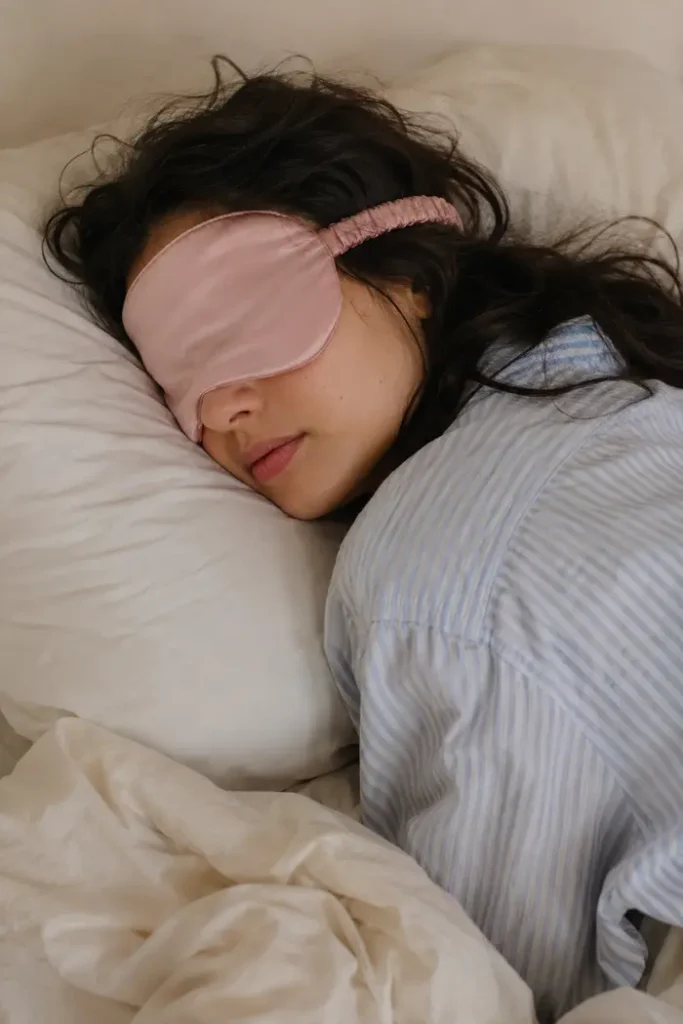
This pink eye mask and white pillow combo looks peaceful because nothing about it says, “COME ON, FALL ASLEEP RIGHT NOW.” And weirdly enough, that is important.
If you are lying there getting increasingly furious that you are still awake, forcing sleep can turn bedtime into a performance review. Instead, give yourself permission to simply rest.
If you have been awake for roughly 20 minutes and feel nowhere near sleepy, the NHS suggests getting up, sitting somewhere comfortable, and doing something relaxing like reading or listening to quiet music. Keep the lights low, skip the phone rabbit hole, and return to bed when you start feeling sleepy again.
Much better than checking the clock every six minutes and calculating exactly how ruined tomorrow is going to be.
9. Move Your Body Enough to Take the Edge Off
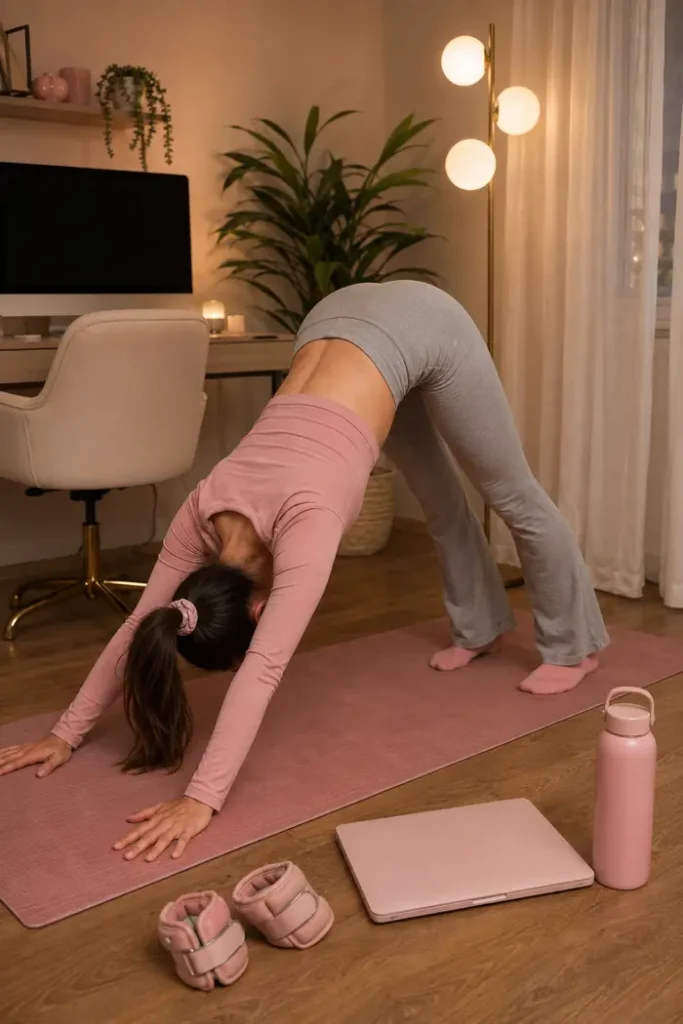
The pink yoga mat, matching long-sleeve top, little ankle weights, water bottle and laptop nearby are basically the cutest reminder that movement does not need to involve a brutal 90-minute workout.
Being physically active during the day can support better sleep, whether that means a workout, a brisk walk, yoga, or simply moving more than your desk chair usually allows.
If hard workouts close to bedtime leave you feeling wide awake, move them earlier. At night, something gentle like slow stretching may suit you better. Think less “personal best” and more “my shoulders have finally stopped living next to my ears.”
A Super-Simple Wind-Down Routine for Tonight
If all nine ideas feel like a lot, do not overhaul your entire life by bedtime. Start ridiculously small. Eat dinner with enough time to settle afterward, lower the lights, put your phone away for the last part of the evening, take a warm shower, read for a little while, and keep your bedroom dark, quiet, and comfortable.
Then try getting up at roughly the same time tomorrow instead of “catching up” by turning your morning into an accidental afternoon. The glamorous secret to a better sleep routine is annoyingly unglamorous: consistency.
Quick FAQ About Falling Asleep Faster
Why am I exhausted but still unable to fall asleep?
Sometimes your body is tired while your brain is still completely switched on. Stress, an irregular schedule, caffeine, bright screens, your bedroom environment, or even a late nap can all play a role. Rather than obsessing over one perfect trick, look at your whole evening and see what might be keeping you alert.
What should I do when my brain will not stop thinking at night?
Get the thoughts out of your head before you get into bed. Write tomorrow’s tasks down, jot down whatever you are worrying about, or spend a few minutes doing slow breathing or another relaxing activity. And please do not open your email to “quickly fix” the thing you remembered. That is how bedtime becomes a staff meeting.
Should I take something to make myself fall asleep?
If you are thinking about sleep medicines or supplements, talk with a doctor or pharmacist rather than randomly building your own nighttime cocktail from social media recommendations. What is appropriate depends on your health, medications, and the reason you are having trouble sleeping in the first place.
The Bottom Line
Learning how to fall asleep quickly is less about discovering one secret hack and more about making sleep the obvious next step of your evening.
Dark room. Comfortable bedding. Earlier caffeine. A little movement. A calmer hour before bed. Less pressure to knock yourself out the second your head touches the pillow. None of it is wildly complicated, which is precisely why it is worth trying consistently.
And if sleep problems have been going on for months, are making everyday life hard to manage, or come with things like loud snoring or interrupted breathing, bring it up with a healthcare professional. At that point, you deserve more than another lavender candle and crossed fingers.
